
____________________________________________________________________________
| Ensure that you can participate in IHEA’s Board elections |
| IHEA’s largest Board elections are underway! If you are currently a paid-up member, you will have received an email with a personalized link to the voting system. If you haven’t received this link: – Please check your spam / junk folder for this mail – Check that your membership has not expired / that your membership fees have been paid – If your membership is current and you can’t find your voting email, please contact ihea@healtheconomics.org Please note: – Your voting link can only be used once, so please don’t share it with others – Please vote for all seven Board positions – it is helpful to review the information on the 24 candidates here before entering the voting system – We are using the Instant Run-Off voting system, so you will be asked to rank the candidates for each position rather than just selecting one preferred candidate. – Please vote before the election ends on 9 December |
| Are you maximizing the benefits of being an IHEA member? Why not join one of our Special Interest Groups |
| Our Special Interest Groups (SIGs) provide a forum for IHEA members with a common interest to network, keep updated on the latest research and share your ideas and knowledge. There are currently 12 SIGs which focus on a specific research area: – Economics of Children’s Health & Wellbeing – Economics of Digital Health Technology – Economics of Genomics and Precision Medicine (Econ-Omics) – Economics of ObesityEconomics of Palliative and End-of-Life Care – Economics of Risky Health Behaviors – Equity Informative Economic Evaluation – Financing for Universal Health Coverage – Health Preference Research – Health Systems Efficiency – Health Workforce – Mental Health Economics There is also a SIG focusing on Teaching Health Economics and another focusing on supporting Early Career Researchers. SIGs organize regular webinars which may focus on developing methodological and other professional skills, presenting the findings of innovative research, opportunities for students and other early career researchers to present and receive comments on work-in-progress, or provide an opportunity to network with colleagues working on similar research or teaching activities. SIGs also share information on publication and funding opportunities and support members in submitting organized session proposals for the IHEA Congress. If you don’t already belong to a SIG, join by: – Signing in at the member login on the IHEA website – Selecting the Special Interest Group button – Click on “Join Group” next to the SIG that you wish to join You will then receive information on all webinars organized by that SIG as well as SIG newsletters. SIGs are organized by IHEA members for IHEA members – join a SIG today and start engaging with colleagues across the world working in the same area. |
| Will you be at the ASSA meetings in January 2026? |
| If so, we encourage you to participate in the two IHEA sessions (see below) and the IHEA and ASHEcon reception on Sunday, January 4th, from 6:30-7:30 PM. The Economics of International Health Saturday, January 2, 2026; 8:00-10:00 AM (EST) Chair: Shiko Maruyama, University of Osaka Improving the Distribution of Quality in Health Provision: Two Incentive Reforms in Peru’s Healthcare System Matteo Magnaricotte, University of Chicago; José Flor-Toro, Northwestern University Discussant: Joseph Price, Brigham Young University Citizenship Policy and the Spread of Communicable Diseases: Evidence from the Dominican Republic Fabiola Alba Vivar, Wake Forest University; Jose Flor-Toro, University of Chicago; Eduardo Campillo Betancourt, Northwestern University Discussant: Dafne Murillo, Columbia University Drug trafficking and the homicide epidemic in the Caribbean Basin Brian Marein, Wake Forest University Discussant: David Blake Johnson, University of Central Missouri Sunset Time and its Effect on Adult Health Padmaja Ayyagari, University of South Florida; Shobhit Kulshreshtha, Tilburg University; Leena Bhattacharya, Tilburg University Discussant: Karen Eggleston, Stanford University The Economics of Pharmaceutical and Medical Innovation Saturday, January 2, 2026; 10:15 AM-12:15 PM (EST) Chair: John Cawley, Cornell University Data Privacy and Medical Innovation: The Case of GDPR Jennifer Kao, UCLA Anderson; Sukhun Kang, UCSB Discussant: Jie Fang, McGill University Diffusing Innovations Under Market Competition: Evidence from Drug-Eluting Stents Ginger Jin, University of Maryland College Park; Hsienming Lien, National Chengchi University; Xuezhen Tao, Shanghai University of Finance and Economics Discussant: Lucy X. Wang, UMass Amherst Optimal Push, Pull, and Failure Funding for Global Health David Ridley, Duke University; Peng Sun, Duke University; Chenxi Xu, Duke University Discussant: Andrew Mulcahy, RAND Corporation Improving the availability of stem-cell donors: A natural field experiment Daniel Wiesen, University of Cologne; Michael Haylock, BCMED; Patrick Kampkötter, University of Tuebingen; Mario Macis, Johns Hopkins University; Susanne Seitz, DKMS; Robert Slonim, University of Technology Sydney Discussant: Hannah Bae, Michigan State University |
| Call for Submissions for Student Paper Prize |
| Are you a health economics Masters or Doctoral student? Why not submit a paper from your degree research for consideration for the 2026 Student Paper Prize. You could be on the stage in the opening plenary of the 2027 IHEA Congress in Ecuador. 2025 Student Paper Prize Winners |
 |
| Deadline: Monday, January 19, 2026 The International Health Economics Association (IHEA) is pleased to invite submissions for the Annual Student Paper Prize in Health Economics.A student is defined as someone currently studying (full or part-time) at a higher education institution, at either a Master’s or Doctoral level. In addition, students who graduated in the past year (since January 2025) qualify as long as the paper was written while registered as a student. Papers can be published or unpublished, but must be in a comparable format to a published paper in Journal of Health Economics or Health Economics, of maximum length 8,000 words (excluding abstract, tables, figures, references and any appendices). Papers should be in English. Previous winners of this Prize are not eligible to submit a paper. Papers will be reviewed by an International Committee chaired by Shiko Maruyama (University of Osaka). The Prize will be: complimentary registration for the 2027 IHEA Congress to present the paper in a Student Prize Special Organized Session chaired by the IHEA President, or Chair of the Prize Committee; a cash prize; and the offer (if the author wishes, and the paper is unpublished) of potential fast-track publication in Health Economics, subject to Editorial approval. The runners-up will receive a small cash prize and complimentary registration for the 2027 IHEA Congress. They will be invited to give brief presentations at the IHEA Congress Student Prize Special Organized Session. All prize winners will also receive a certificate that will be presented during the Opening Plenary of the Congress. Students are invited to submit their papers via the online system here (select the “Student Paper Prize” button and then the “Submit a Paper” button). You will be asked to complete a form and to upload two files:Your full paper (including abstract, tables, figures, references and any appendices)A cover letter, signed by your supervisor, which outlines your contribution to the paper and research on which it is based (percentage and nature of contribution – conceptualization, data collection, analysis, writing, etc.) and a description of the relative contribution of any co-authors. The student contribution should be at least 75%. |
| Call for Submissions for Arrow Award |
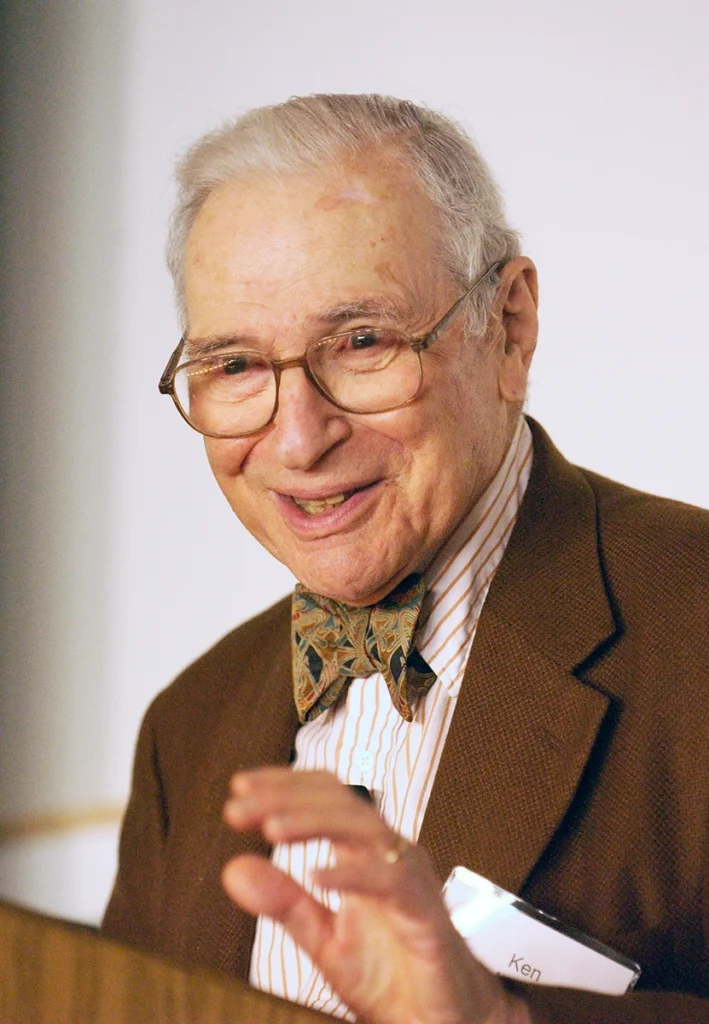
| IHEA’s annual Arrow Award was created to recognize excellence in the field of health economics with the award presented to the author or authors of the paper judged to be the best paper published in health economics in English in the award year. The Award was set up in honour of the late Kenneth Arrow and in recognition of the influence of his seminal paper from 1963 “Uncertainty and the welfare economics of medical care”. |
| Deadline: Monday, January 19, 2026 In pursuit of greater diversity in the papers considered for this award, including the research topics and health system contexts where research is undertaken, IHEA would like to encourage its members to nominate papers published in peer-reviewed journals during 2025 that push the frontiers of health economics forward. Nominations for the Arrow Award can be submitted via a portal on the IHEA website (select the “Arrow Award” button and then the “Submit a Paper” button). You will be asked to provide a brief motivation and must upload a copy of the published paper. |
| Upcoming Events |
| The Introduction of PrEP on HIV: Incidence, Mortality and Heterogeneity Date: December 1, 2025 Time: 3:30 pm – 4:30 pm UTC Speakers: Sebastian Tello Presented by: Economics of Risky Health Behaviors SIG Learn more here |
Stay tuned for more on upcoming IHEA webinars! You can view all 2024-2025 events here.
Check out our website here.