
____________________________________________________________________________
| Opening Remarks From Executive Director |
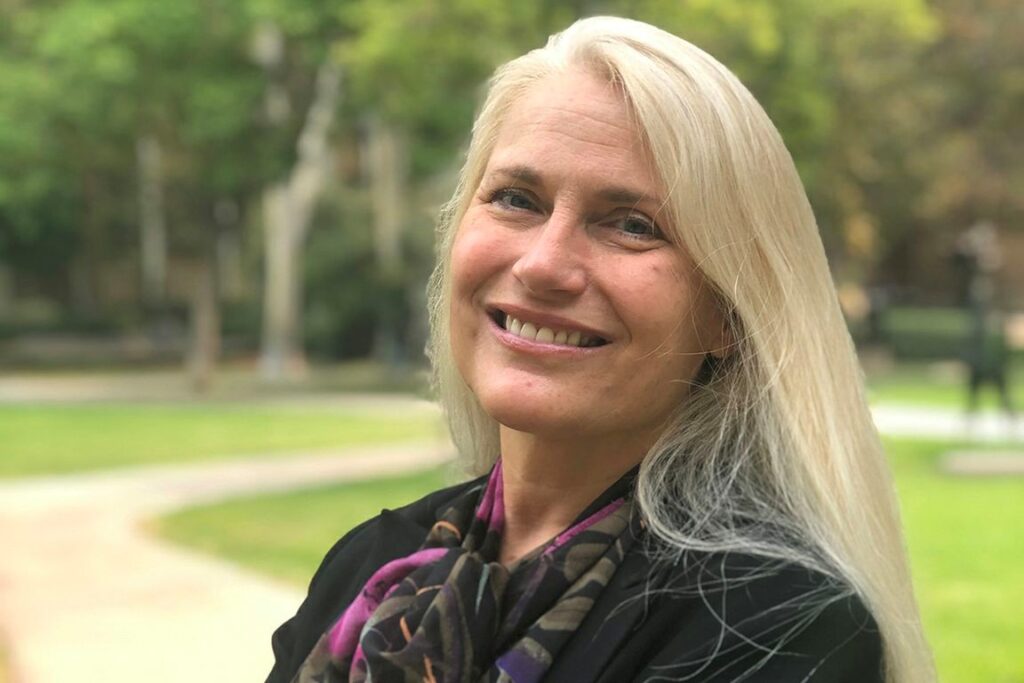
| As IHEA continues to advance health economics globally, our focus remains on supporting rigorous research, strengthening policy impact, and fostering a vibrant, inclusive professional community. In the months ahead, we are excited to deepen engagement across regions and career stages, expand opportunities for collaboration, and enhance the resources available to our members. Preparations for the 2027 IHEA World Congress are well underway, with important updates on the Congress location and ongoing collaboration with our Latin American partners. Alongside this, initiatives such as our Mentoring Program, Special Interest Groups, and global calls for research continue to reflect the strength and diversity of our community. Your engagement is central to IHEA’s continued growth and impact. I look forward to working together in the year ahead. Susan Ettner IHEA Executive Director |
| Important updates on 2027 IHEA Congress Change in Congress Location |

| Due to new government travel advisories for Guayaquil, IHEA will be moving the 2027 Congress to a different location unaffected by travel advisories to ensure that all delegates will be able to use their government research funding to participate. The current plan is to remain within Ecuador but move the Congress to the capital, Quito. Located in the Andes mountains only a few miles from the equator, Quito is the second-highest capital city in the world. Quito is renowned for combining Indigenous and European artistic traditions, having been founded by the Spanish on the ruins of an Inca city in 1534. Its historic city center, among the best-preserved colonial districts in Latin America, was one of the first UNESCO World Heritage Sites. Quito offers a modern airport well-serviced by international carriers, pleasant weather year-round, and a popular gateway to the Galápagos Islands and Amazon forest. We look forward to continuing to plan the 2027 Congress in collaboration with IHEA’s Latin American Countries (LAC) Advisory Group and the continuing and new members of the local organizing committee, in particular Bernard Moscoso, Omar Galárraga, Mónica Rojas, Iván Tomás Palacios León, and Sebastián Oleas. Professors Rojas, Palacios León and Oleas are faculty at the Universidad San Francisco de Quito (USFQ), which is one of Ecuador’s most prestigious universities and known for its multidisciplinary health economics research. We will confirm the new Congress location and provide more details soon. |
| Would you like to participate as a mentor or mentee in IHEA’s mentoring program for early- and mid-career health economists? |
| The IHEA Mentoring Program supports early- and mid-career health economists in their professional development and personal wellbeing. Mentees are matched to mentors based on career goals versus experience, professional development needs versus skills, common research interests and other characteristics. The program consists of at least four meetings, usually via video call, over a one-year period. Since the program was started in 2019, it has grown to nearly 100 mentor-mentee pairings per year. We are calling for expressions of interest in being a mentor in the next round of the program, which will start in June 2026. There are many benefits of serving as a mentor, such as: Being able to share valuable knowledge with others, based on your experience Helping the next generation of health economists to use and further develop their skills, and motivate and support them to fulfill their potential Developing your communication, coaching and leadership skills Providing an opportunity to reflect on your own practice. Mentors should have at least seven years post-graduation experience; our mentees are looking for mentors who have more experience than they do, and particularly that mentors are working independently and are taking on some management or leadership roles. We are also calling for applications from IHEA members to participate as mentees. While the program may be of particular interest to early-career health economists (currently studying or within 7 years of graduation), it is also of benefit to mid-career health economists who are working more independently and assuming more responsibility for supervision, managing research teams and other leadership activities. Mentee applicants must be current IHEA members to be eligible. In the event that we cannot identify mentors for all prospective mentees, first-time applicants will take priority. Please note that you should be highly motivated, willing to take responsibility for contacting and following up with your mentor, and willing to invest time in preparing for and reflecting on meetings with your mentor. You can apply to participate as a mentor or mentee using the buttons below. Please note that prospective mentees will need to log into their IHEA member account to complete the application. Mentors are not required to be IHEA members. Applications close on Monday, April 27, 2026 at 21:00 UTC. |
| Call for Papers: ASHEcon, HERO & IHEA Sessions at ASSA 2027 |
| The International Health Economics Association (IHEA), in collaboration with the American Society of Health Economists (ASHEcon) and the Health Economics Research Organization (HERO), invites submissions for presentation at the 2027 Allied Social Science Association (ASSA) Annual Meeting, to be held in Washington, D.C., from Sunday, January 3 to Tuesday, January 5, 2027. Based on submitted abstracts, papers will be selected for two IHEA-organized sessions, one ASHEcon-organized session, and five HERO-organized sessions. IHEA seeks abstracts for sessions focused primarily on internationally relevant topics in health economics. ASHEcon seeks abstracts related to U.S.-focused health economics topics, and HERO seeks abstracts addressing issues of broad relevance to the health economics field. Submission Guidelines Abstract submission is open to all. Abstract text must be 3,000 characters (including spaces) or fewer. If you wish to submit your abstract as part of a coordinated group for consideration as a complete session, you must provide suggested discussants for each paper. Please note that submission as a group does not guarantee that all papers in the set will be included in the program. IHEA, ASHEcon, and HERO are independent organizations, each holding affiliate status within ASSA. Please submit abstracts by April 30, 2026 here. |
| Join one of our Special Interest Groups (SIGs) – Make the Most of your Membership in 2026! |
| The Di McIntyre Student Paper Prize recognizes excellence by students in the field of health economics. Originally known as the IHEA Student Paper Prize, it was first awarded in 1999 and biennially thereafter to coincide with the IHEA congress. Starting in 2017, there has been a standing Student Paper Prize Committee to award this prize annually to the master’s or doctoral student paper judged as best in the award year. Each year the Committee considers submitted papers using similar criteria to that of the long-established Arrow Award. In 2026, the award was renamed the Di McIntyre Student Paper Prize to acknowledge the important and lasting impact of IHEA’s previous Executive Director, Di McIntyre, particularly on engagement with early career researchers. Submissions for the 2026 Prize were received from students from Australia, Bangladesh, Brazil, China, Ethiopia, Germany, India, Italy, Japan, Kosovo, Lesotho, Nigeria, Romania, Singapore, South Korea, Spain, Uganda, United Arab Emirates, and the USA. The 2026 First Prize is jointly awarded to: Tsepang Juliet Khumalo (doctoral student from Lesotho, recently graduated from Stellenbosch University) and Chunfeng Zhang (doctoral student from China, studying at Peking University). An honourable mention goes to the runner-up, Marta Curull Sentís (doctoral student from Spain, studying at University of Barcelona).  Tsepang Juliet Khumalo’s paper is entitled: “The Mental Health Impact for Adolescents Ageing Out of South Africa’s Child Support Grant”. Using South African longitudinal survey data, this study examined what happened to the mental health of teenagers when they age out of South Africa’s largest cash transfer program, the Child Support Grant. The researchers found that losing the cash benefit led to a sharp decline in mental well‑being, especially among girls, adolescents in urban areas and those in economically vulnerable households. The study highlights an overlooked issue in social protection: stopping cash support at a sensitive stage of life can have serious mental health consequences, so how and when benefits are withdrawn matters greatly.  Chunfeng Zhang’s paper, “Cash-Out Puzzle and Long-Term Care Insurance: Welfare of the Elderly” (Health Economics, 2025), asks a fundamental policy question in aging societies: Is it better to support frail older adults with care services or with cash? Using evidence from China’s long-term care insurance (LTCI) pilots, the study finds that service-based (in-kind) benefits substantially improve elderly welfare, including lower mortality and better support with daily living, while cash transfers produce much weaker effects. The paper refers to this unexpected gap as the “cash-out puzzle”. It proposes that principal–agent problems and information asymmetry within household care arrangements may limit the effectiveness of unconditional cash benefits. The findings highlight that how long-term care benefits are delivered can matter as much as how much support is provided.  Marta Curull Sentís’ paper is entitled: “Paternity Leave and Intimate Partner Violence”. This study exploited exogenous variation from a 2019 Spanish reform and administrative health records to examine whether requiring new fathers to take two weeks of paternity leave affected intimate partner violence, which is especially common after childbirth. The paper found that mandating fathers and mothers to take leave together reduced severe violence against mothers by roughly half. Couples also became more likely to separate, suggesting that more women exited harmful relationships before violence escalated. These results show that well‑designed paternity leave policies can play a meaningful role in protecting women during a vulnerable period after childbirth. The prize winners will present their papers at a special session of the 2027 IHEA Congress. Many thanks to all those who submitted papers for consideration, and to the Prize Committee for all their hard work. The next call for submissions will be issued later in 2026. Di McIntyre Student Prize Committee Chairperson: Shiko Maruyama (University of Osaka, Japan) Mehdi Ammi (Carleton University, Canada) Amirah Azzeri (Universiti Sains Islam Malaysia, Malaysia) Peter Binyaruka (Ifakara Health Institute, Tanzania) Ronelle Burger (Stellenbosch University, South Africa) Angela Devine (Menzies School of Health Research, Australia) Brenda Gannon (University of Queensland, Australia) Michal Horný (University of Massachusetts Amherst, USA) Jacob Novignon (University of Ghana, Ghana) Alfredo Paloyo (University of Wollongong, Australia) May Ee Png (University of Oxford, UK) Timothy Powell-Jackson (London School of Hygiene and Tropical Medicine, UK) Francesco Ramponi (Harvard University, USA) Flavia Mori Sarti (University of São Paulo, Brazil) Sally Stearns (University of North Carolina at Chapel Hill, USA) Raf van Gestel (KU Leuven, Belgium) Wei Zhang (University of British Columbia, Canada) The Student Prize is sponsored by the Canadian Centre for Health Economics. |

| Join one of our Special Interest Groups (SIGs) – Make the Most of your Membership in 2026! |
| Our Special Interest Groups (SIGs) provide a forum for IHEA members with a common interest in networking, keeping updated on the latest research and sharing ideas and knowledge. SIGs are organized by IHEA members for IHEA members – join a SIG today and start engaging with colleagues across the world working in the same area. There are currently 12 SIGs which focus on a specific research area: – Economics of Children’s Health & Wellbeing – Economics of Digital Health Technology – Economics of Genomics and Precision Medicine (Econ-Omics) – Economics of Obesity – Economics of Palliative and End-of-Life Care – Economics of Risky Health Behaviors – Equity Informative Economic Evaluation – Financing for Universal Health Coverage – Health Preference Research – Health Systems Efficiency – Health Workforce – Mental Health Economics There is also a SIG focusing on Teaching Health Economics and another focusing on supporting Early Career Researchers. If you don’t already belong to a SIG, join by: – Signing in at the member login on the IHEA website – Selecting the Special Interest Group button – Click on “Join Group” next to the SIG that you wish to join |
| Funding, Publication and Other Opportunities |
| PhD Scholarships: University of New South Wales, Health Economics PhD Scholarship: Learn more here |
| Call for Submissions – Regional News |
| Do you have news to share from your region for our IHEA newsletter? Our newsletter is disseminated to thousands of health economists around the world each month, and we are eager to share relevant news from all regions of the world. Regional news items can be sent to ihea@healtheconomics.org by the 20th of each month. |
| Upcoming Events |
| Showcasing ECR Research in Health Economics: BRCA Screening Webinar Date: April 9, 2026 Time: 7:00 am – 8:00 am UTC+0 Speakers: Xia Wei – Postdoctoral fellow, School of Public Health, Peking University and Mackenzie Bourke – PhD Candidate, Economics of Genomics and Precision Medicine Unit, University of Melbourne Learn more here Biobanks and Genomics in Low- and Middle-Income Countries: Emerging Opportunities for Research and Health Economics Webinar & Panel Discussion Date: May 28, 2026 Time: 8:00 am – 9:00 am UTC+0 Speakers: Professor Segun Fatumo – Chair of Genomic Diversity at Queen Mary University of London and Professor Chen Zhu – College of Economics and Management, China Agricultural University, Beijing Learn more here ASHEcon 2026 Annual Conference Date: June 7 – June 10, 2026 Location: Hyatt Regency Minneapolis – Minneapolis, MN Learn more here |
Stay tuned for more on upcoming IHEA webinars! You can view all upcoming events here.
Check out our website here.